Exhibitions for Nobels Fredssenter
Located at Oslo City Hall Square in the converted 1872 train station the Nobel Peace Center is the museum of the Nobel Peace Prize. The museum use the power of the Nobel Peace Prize laureates’ ideas work and causes to engage and inspire small and large actions which make the world a more peaceful place. As one of the most popular museums in Oslo the Nobel Peace Center invites visitors to explore stories of peace conflict resolution and the legacy of the Nobel Peace Prize. We are fortunate to have worked on six exhibitions for the Nobel peace Center.
The Dangerous Prize
Partners: Bolt & Klock
2016
Photos: Johannes Granseth/Nobels Fredssenter
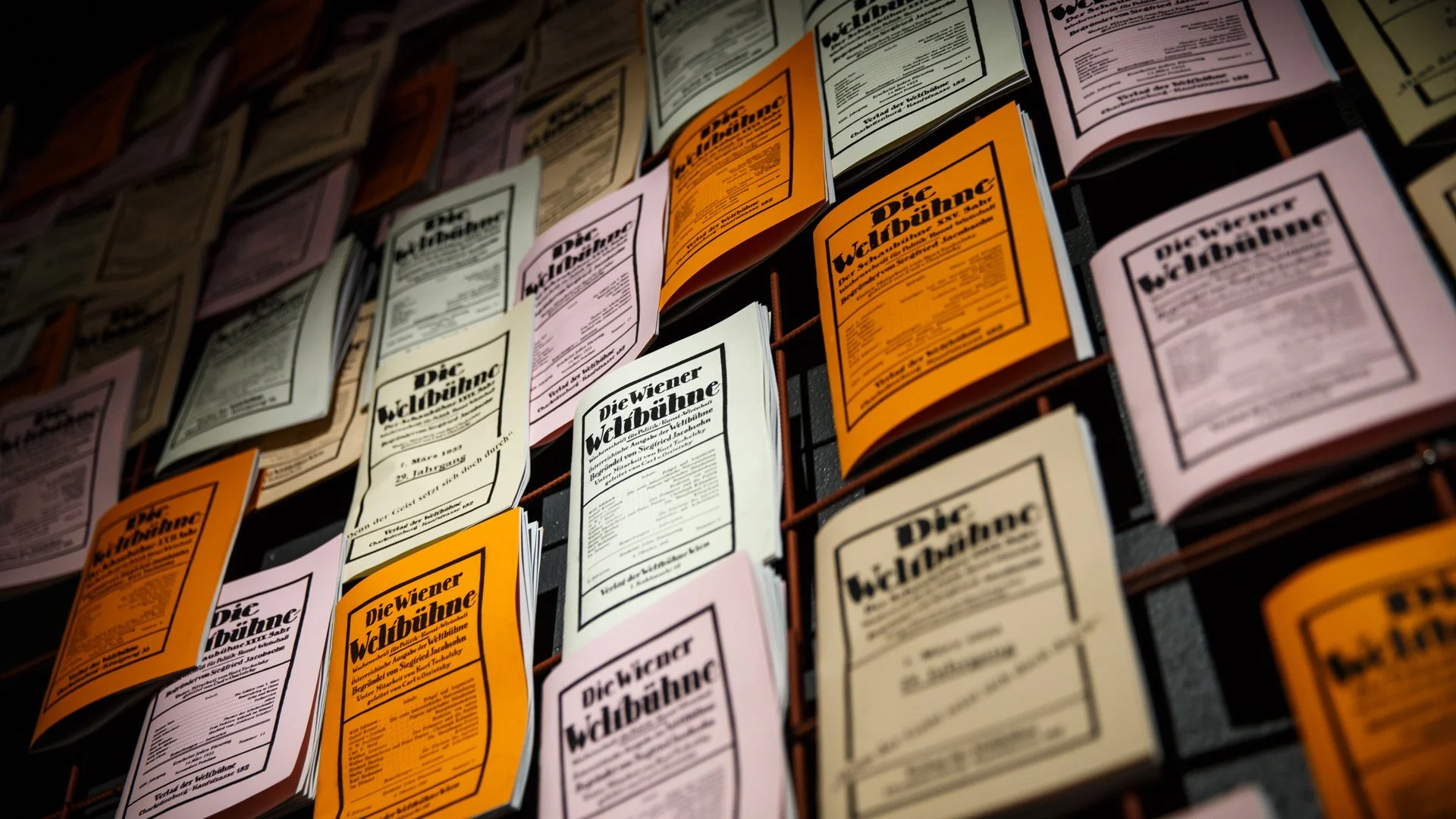
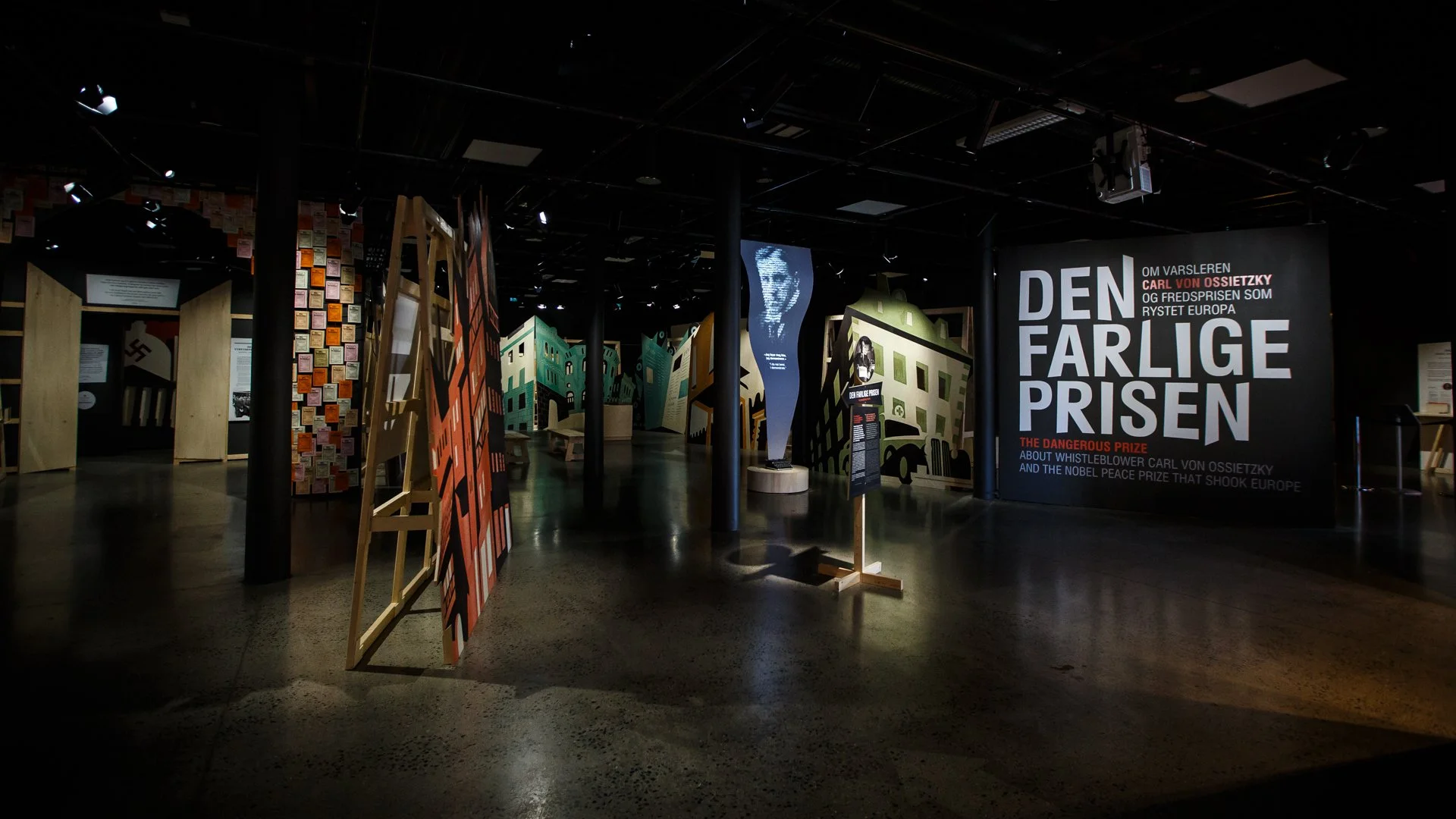
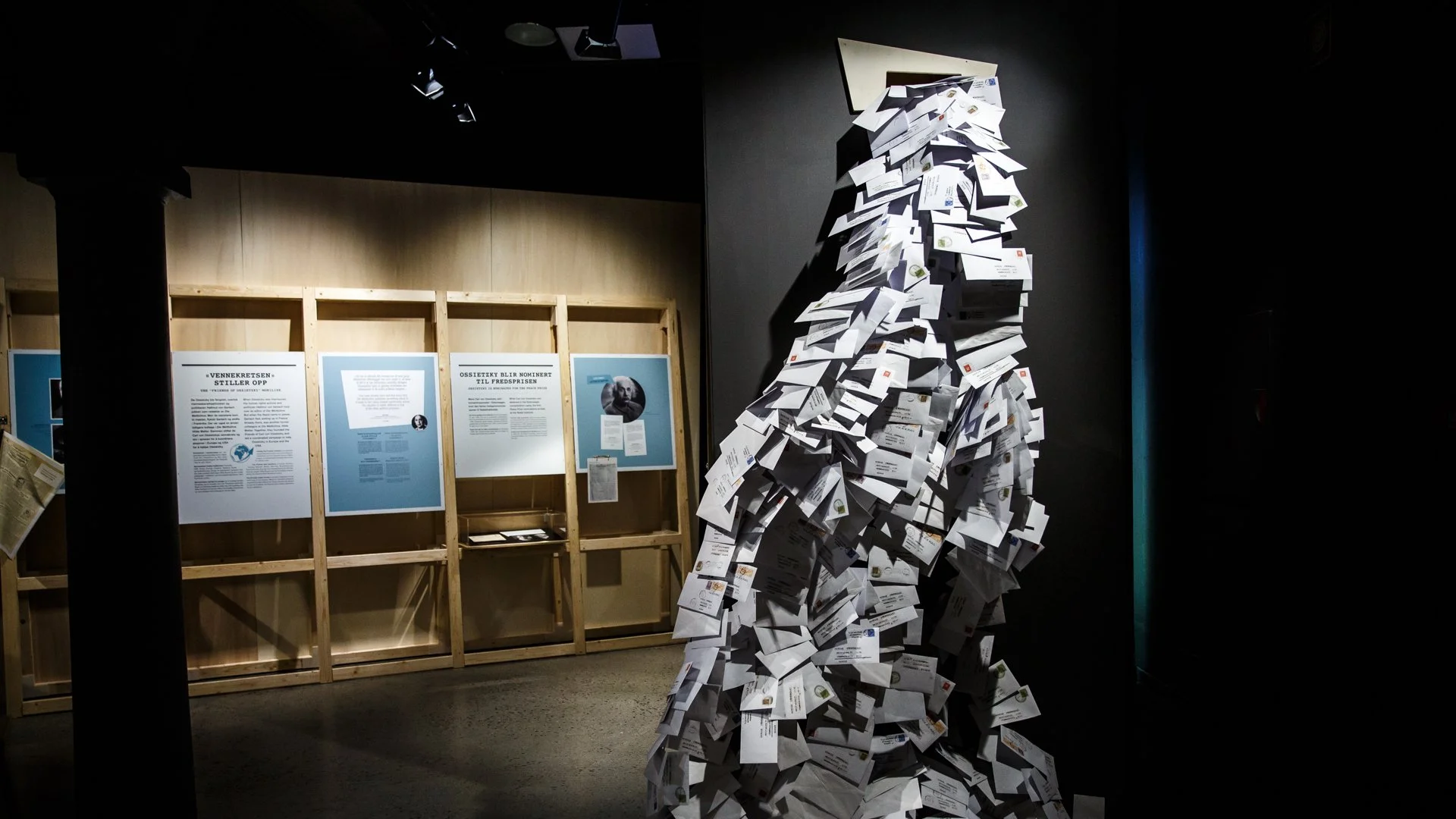
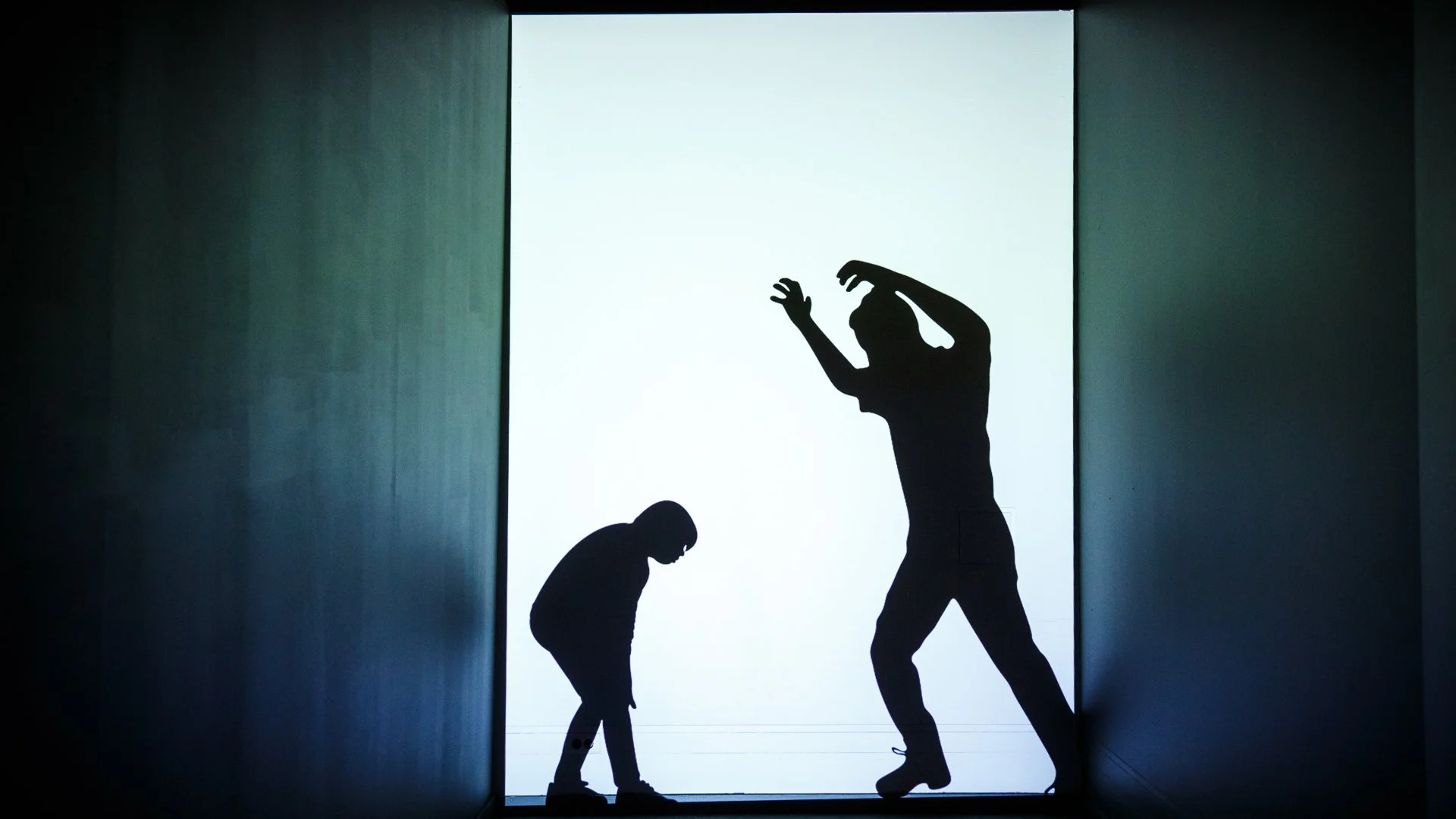
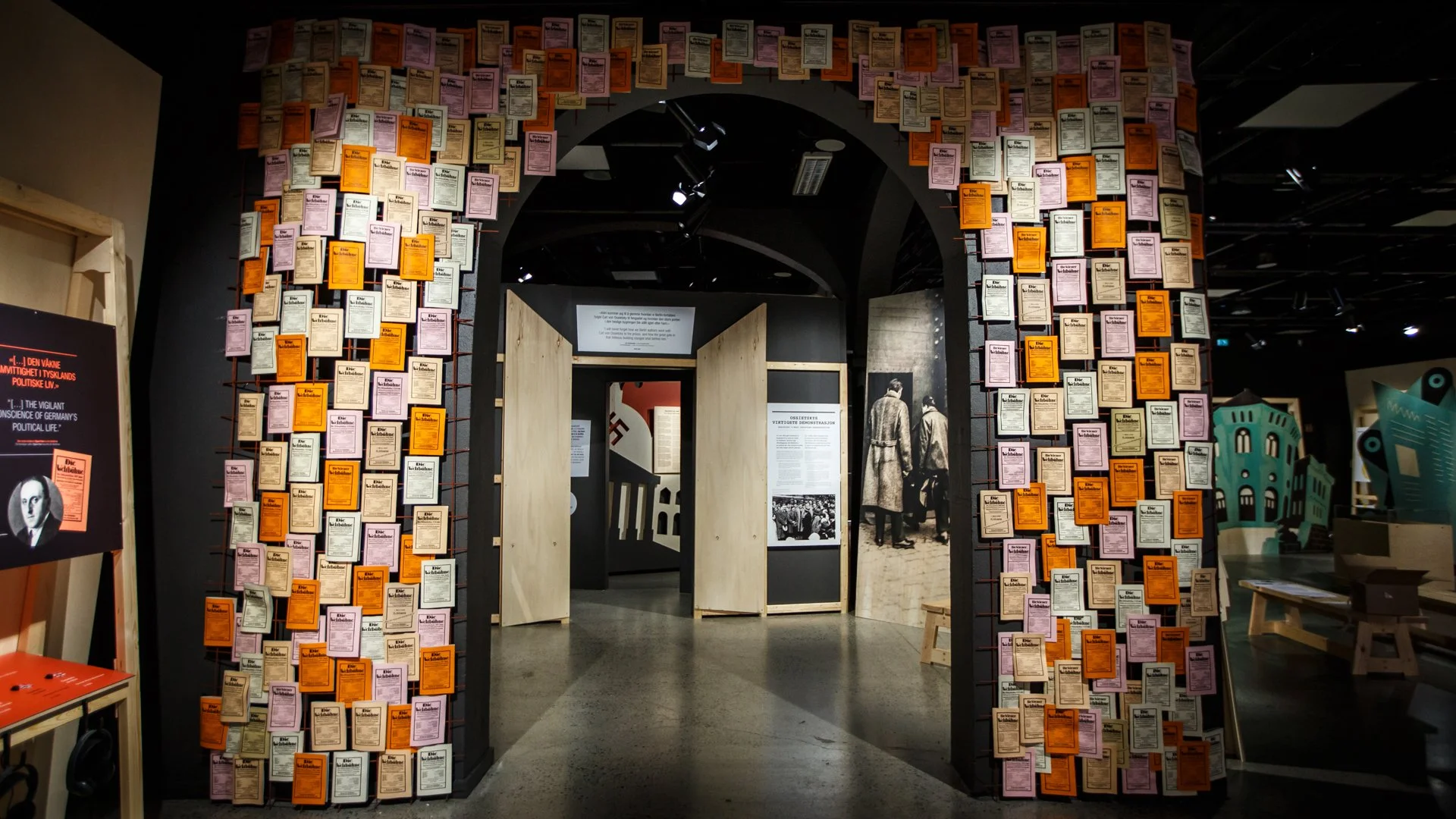
Samarbeidet Bolt og Klock laget årets hovedutstilling på Nobels Fredssenter i 2016. Utstillingen «Den farlige prisen» handlet om varsleren Carl von Ossietzky og fredsprisen som rystet hele Europa. Ossietsky var journalist redaktør og pasifis. Han jobbet for det tyske tidskriftet Die Wehlbune som betyr Verdensscenen. Til et internasjonalt publikum publiserte han her bl.a. kritiske arikler om stormakten Tyskland og Hitler. Ossietzky forsto at prisen for å ytre seg var farlig høy men selv sa han da han gikk i fengsel etter å ha blitt dømt for landssvik: «Jeg føyer meg ikke jeg demonstrerer.»
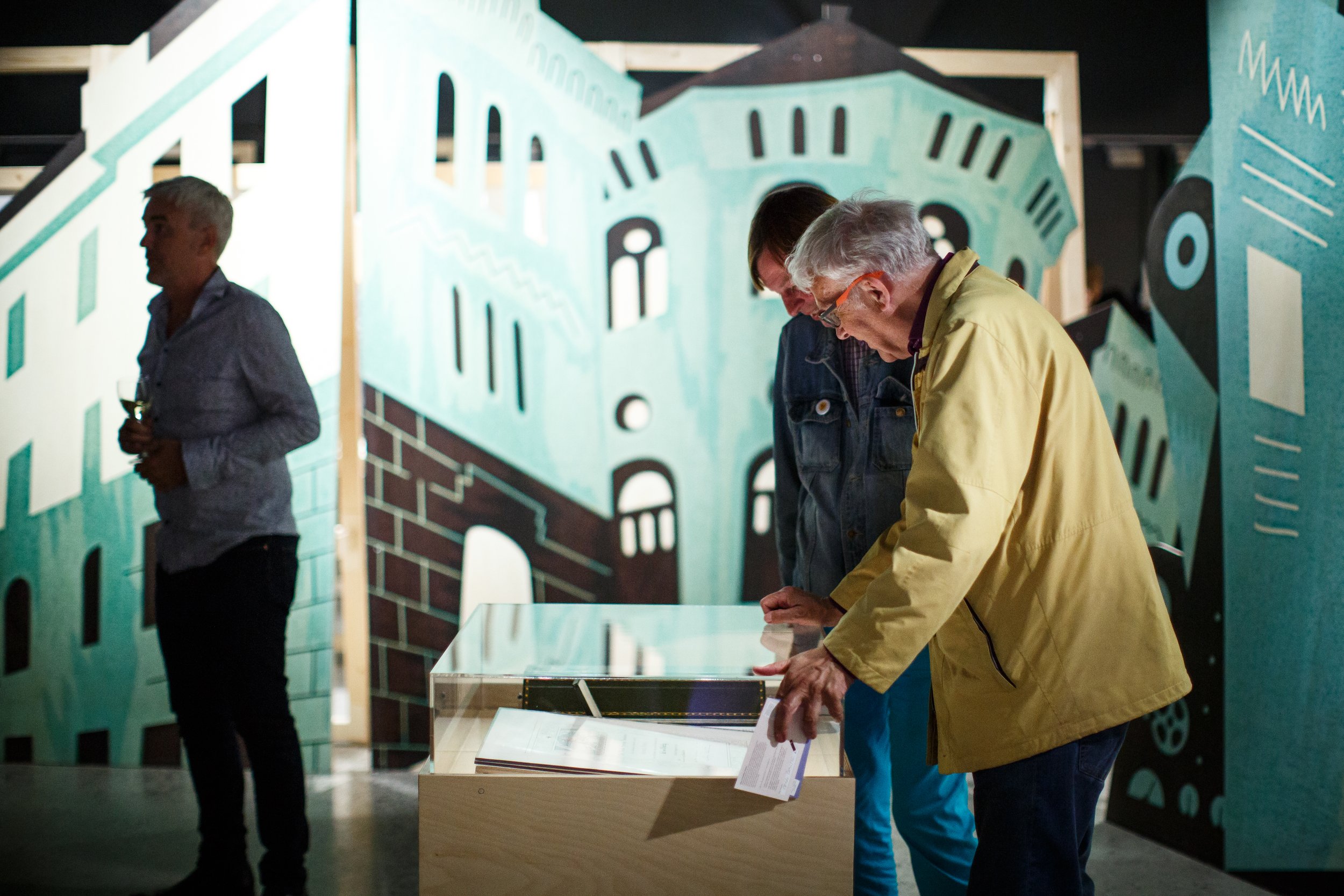
Utstillingskonseptet er bygget opp rundt teaterscenes gjenkjennelige estetikk. I utstillingen ble de besøkende med bak kulissene hvor de kunne fordype seg i det som skjedde. Prisen ble tildelt i 1936 og er en av de mest kontroversielle i fredsprishistorien. Kongen møtte ikke opp på utdelingen og reglene i Nobelkomiteen ble endret for alltid. Dette var en tid preget av fortielse opprør og omveltninger. Vi lot oss inspirere av tysk ekspresjonisme med dens karakteristiske forvrengte perspektiver og med bevisst bruk av materialer og store kontraster i lys og skygge, formidlet vi dramatikken rundt denne Fredsprisen. Her kunne du blant annet sette deg selv inn i hans situasjon og også engasjere deg i flere aktiviteter som dessverre viste hvor aktuell denne prisen er også i dag.
https://www.nobelpeaceprize.org/prisvinnere/1935-article1301-902.html
Tell the world about us
Partners: Bolt og Klock
2018
Photos: Johannes Granseth/Nobels Fredssenter
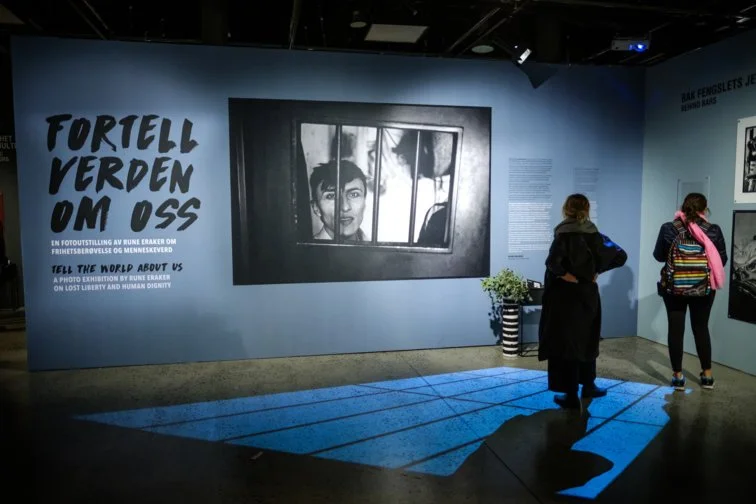
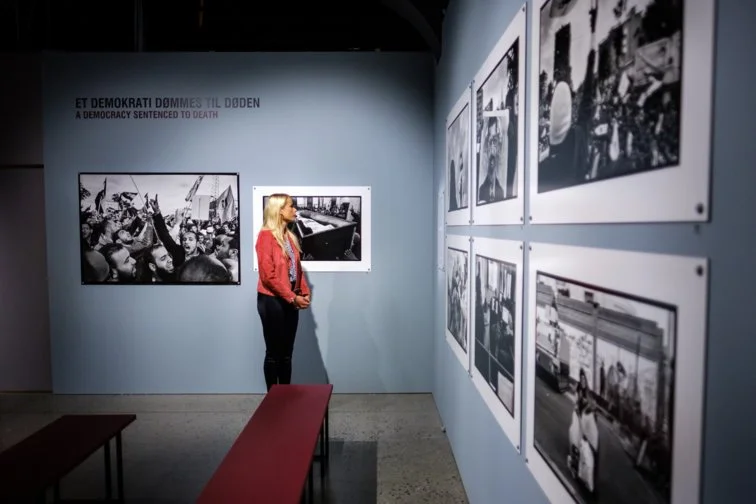
An exhibition about lost liberty and human dignity.
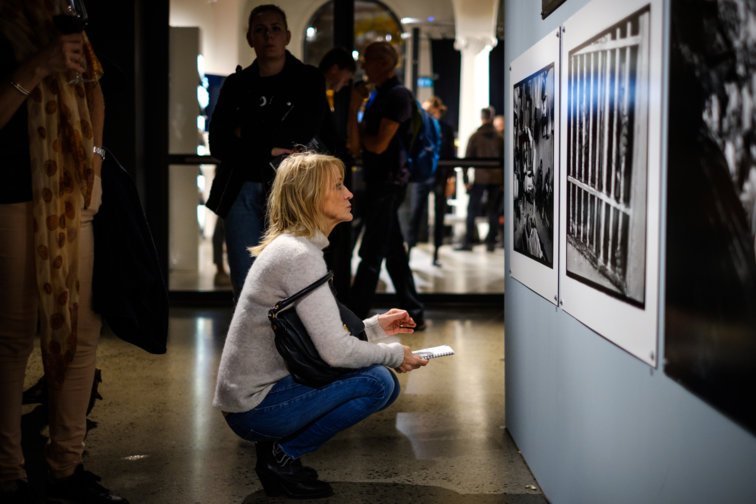
Back in 2002, photographer Rune Eraker visited Colombia to document the living-conditions of political prisoners and member of FARC. One of the inmates gave him a piece of paper through the bars of his cell. On the note it said, “Tell the world about us.” This exhibition tells their story.
After almost 30 years working as a documentary photographer, Eraker wanted to portray powerful and brave people and tell their untold stories. Including famous characters such as Edward Snowden and the 14th Dalai Lama, Eraker has photographed political activists from all over the world. Activists that are under constant pressure from the society they live in. The exhibition is the result of photos from 14 different countries, over the span of 4 years. He has been allowed into maximum security prisons in Latin-America, Asia, Africa, the United States, and Norway. He tells the untold stories of how rape, forced evictions, statelessness, and laws targeting both women who have had an abortion and the LGBTQ+ community, affects people’s lives.
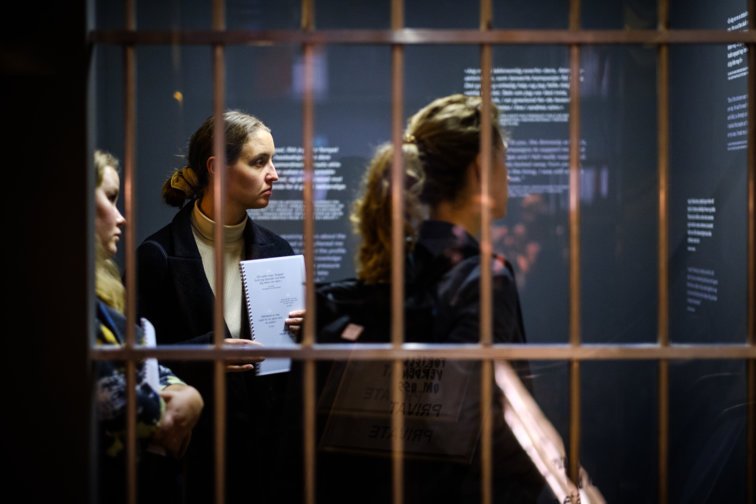
The exhibition design included the design and development of an action element; a death row cell, calling the visitors to act.
Peace at work
Partners: Bolt & Klock + Marte Frøystad
2015
Photos: Johannes Granseth/Nobels Fredssenter
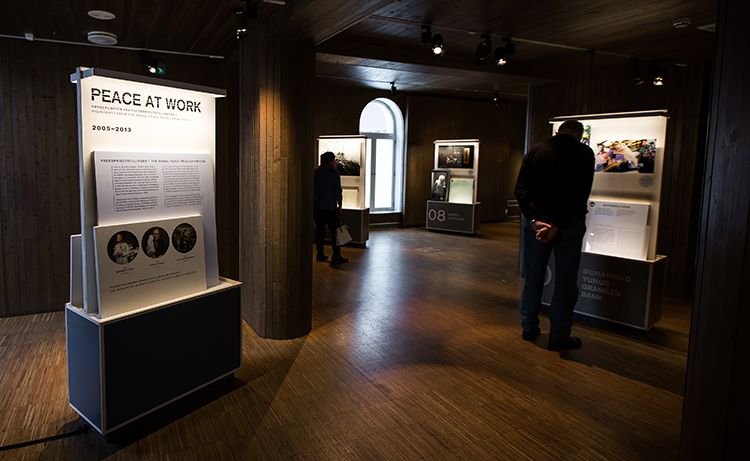
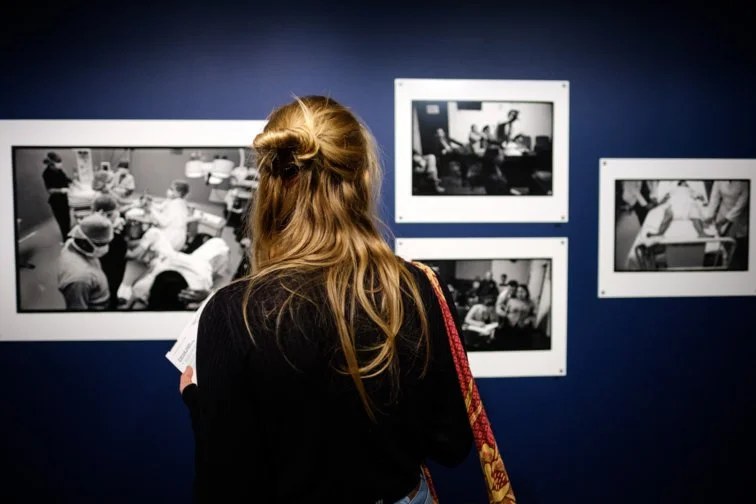
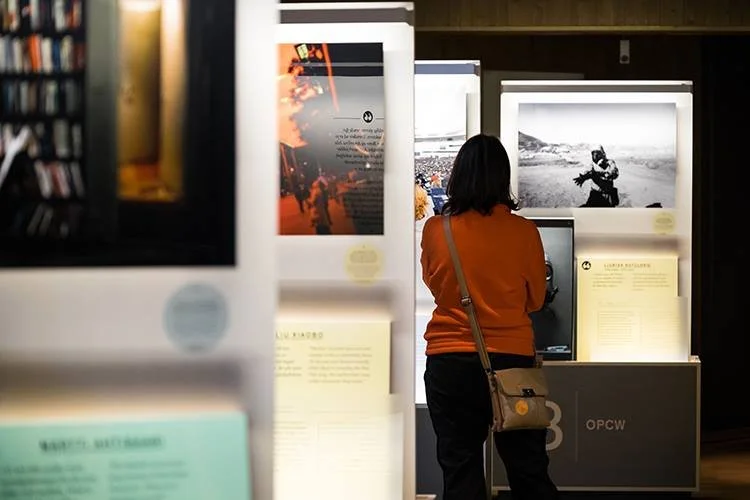
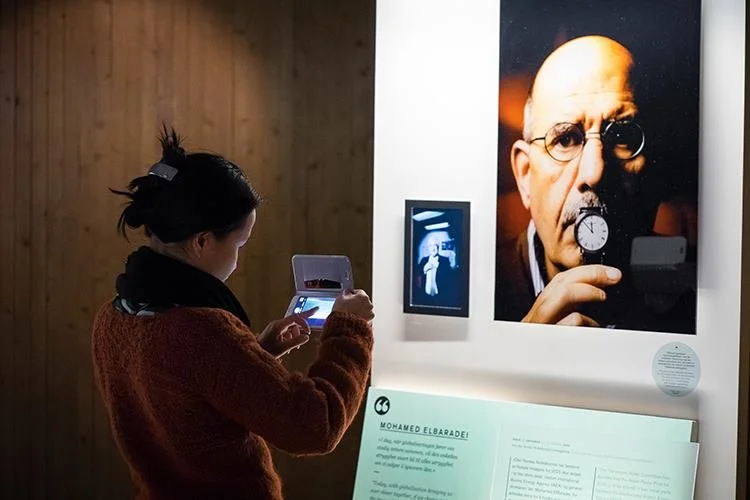
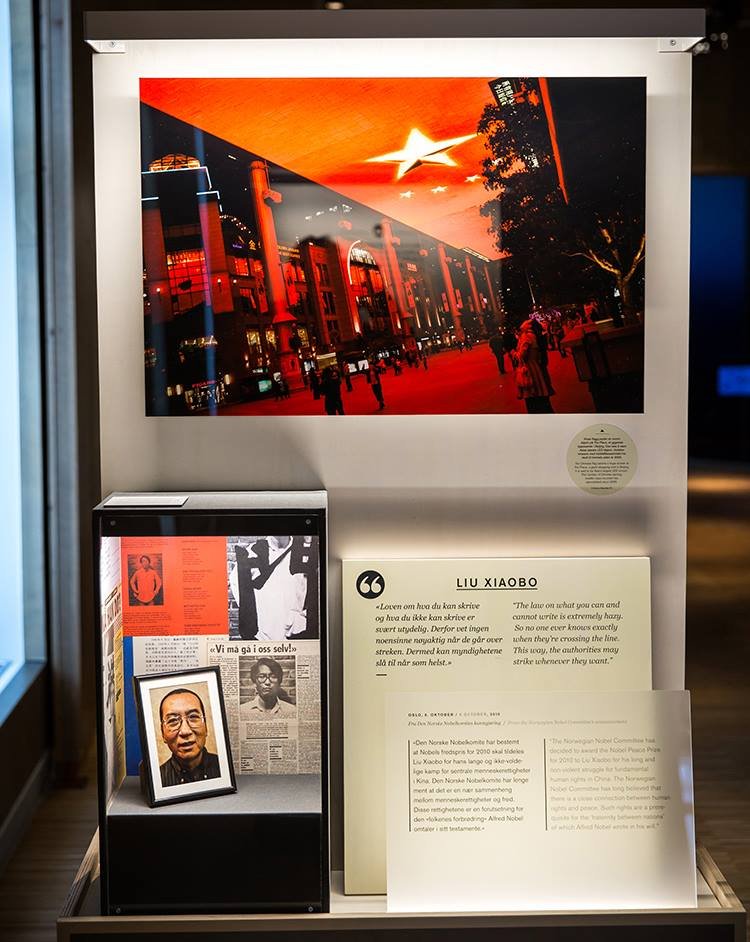
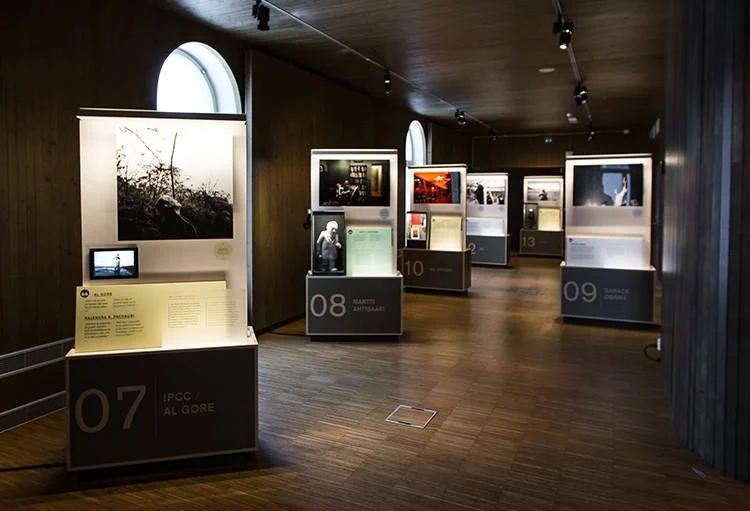
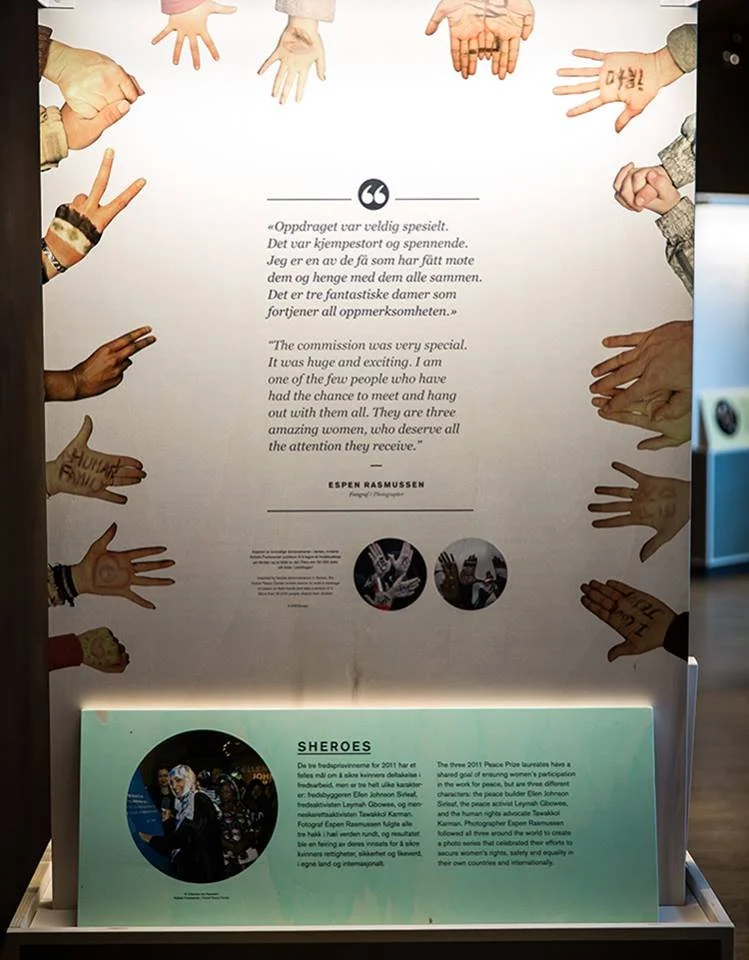
On the second Friday in October every year, the eyes of the world turn to Oslo. As the Nobel Peace Prize is announced at the Nobel Institute, preparations for the Peace Prize Exhibition are kicked off. This has been the tradition since the very first Nobel Peace Prize exhibition was launched at the Nobel Peace Center in 2005. "Peace at work" look at the highlights from all the Nobel Peace Prize Exhibitions 2015-2015. The exhibitions are always photo-based, and we built the exhibitionthis around the photographer's work with the former Peace Prize exhibitions. Photos, objects and the photographer's quote are placed and displayed in big “archive” boxes representing each year. The exhibition is a travelling exhibition which should withstand rough treatment and had to be simple to rearrange for many locations and a very easy plug and play system.
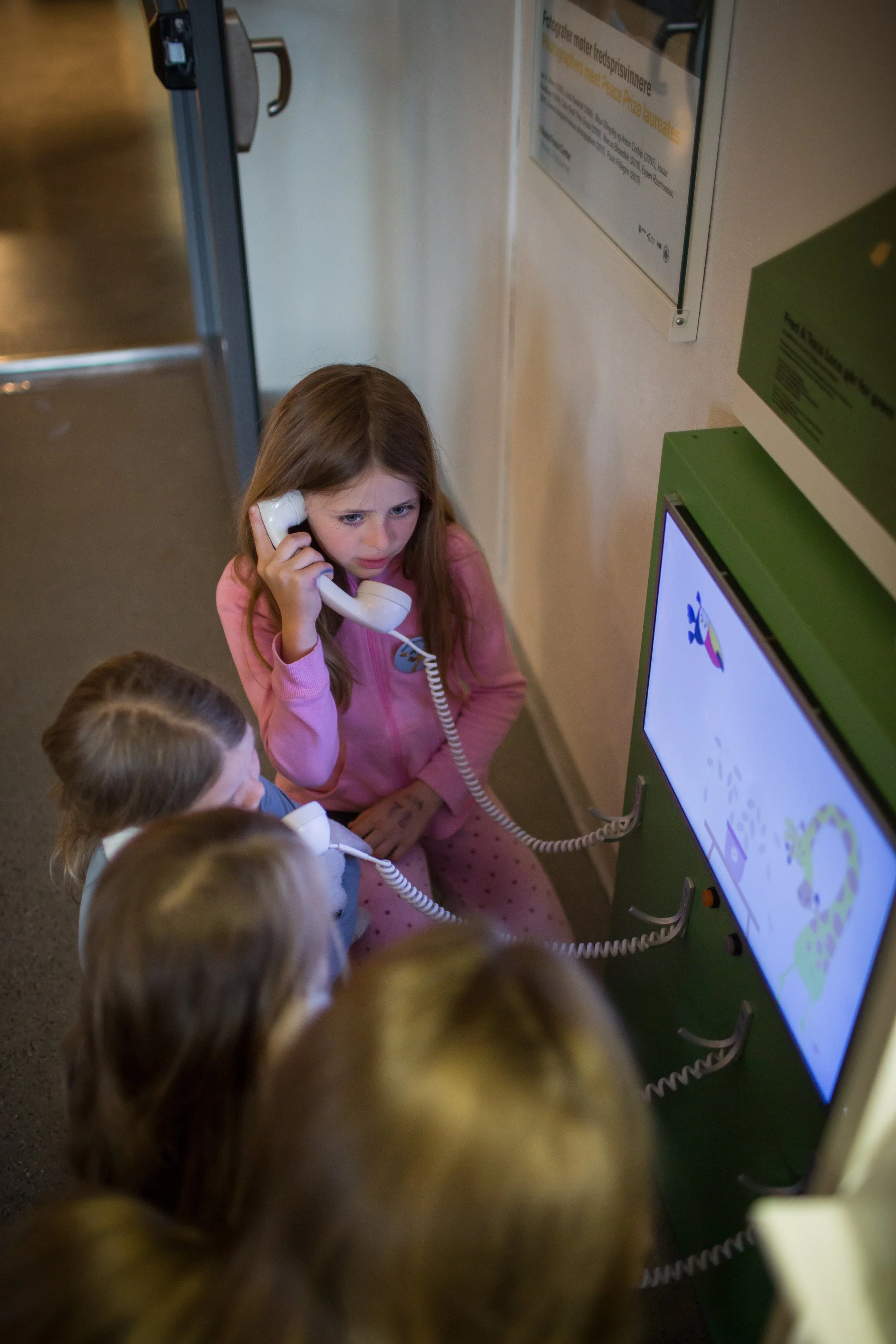
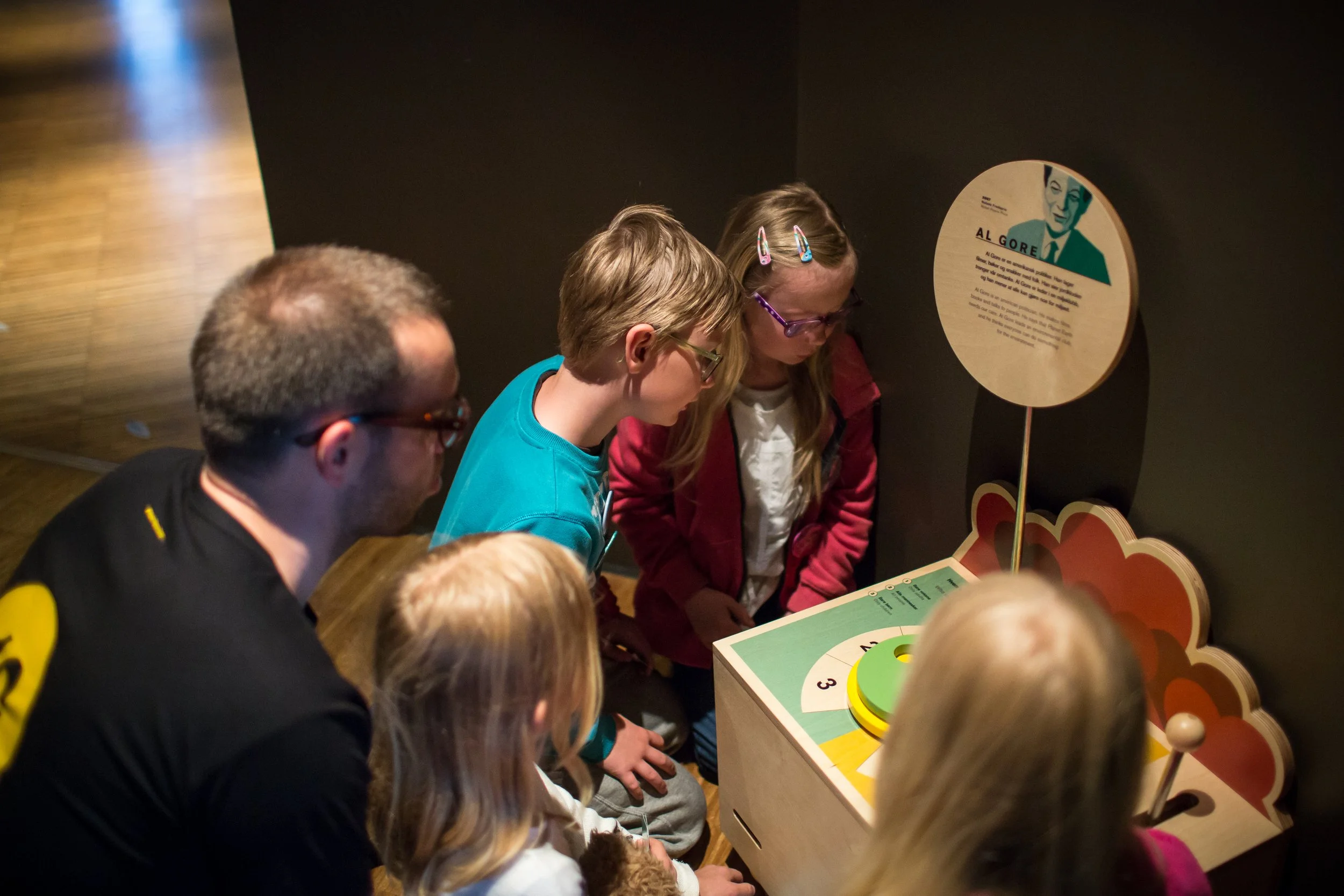
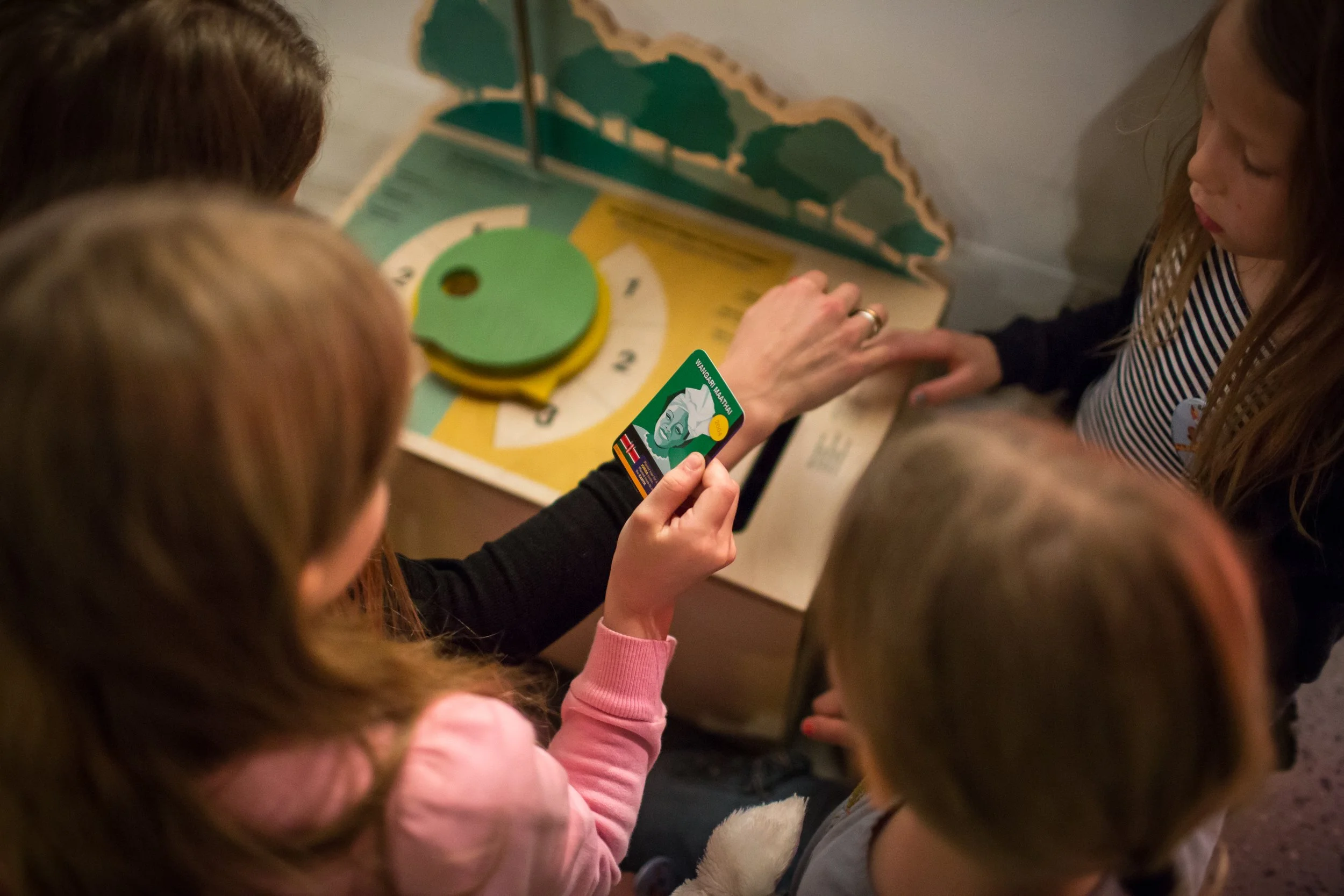
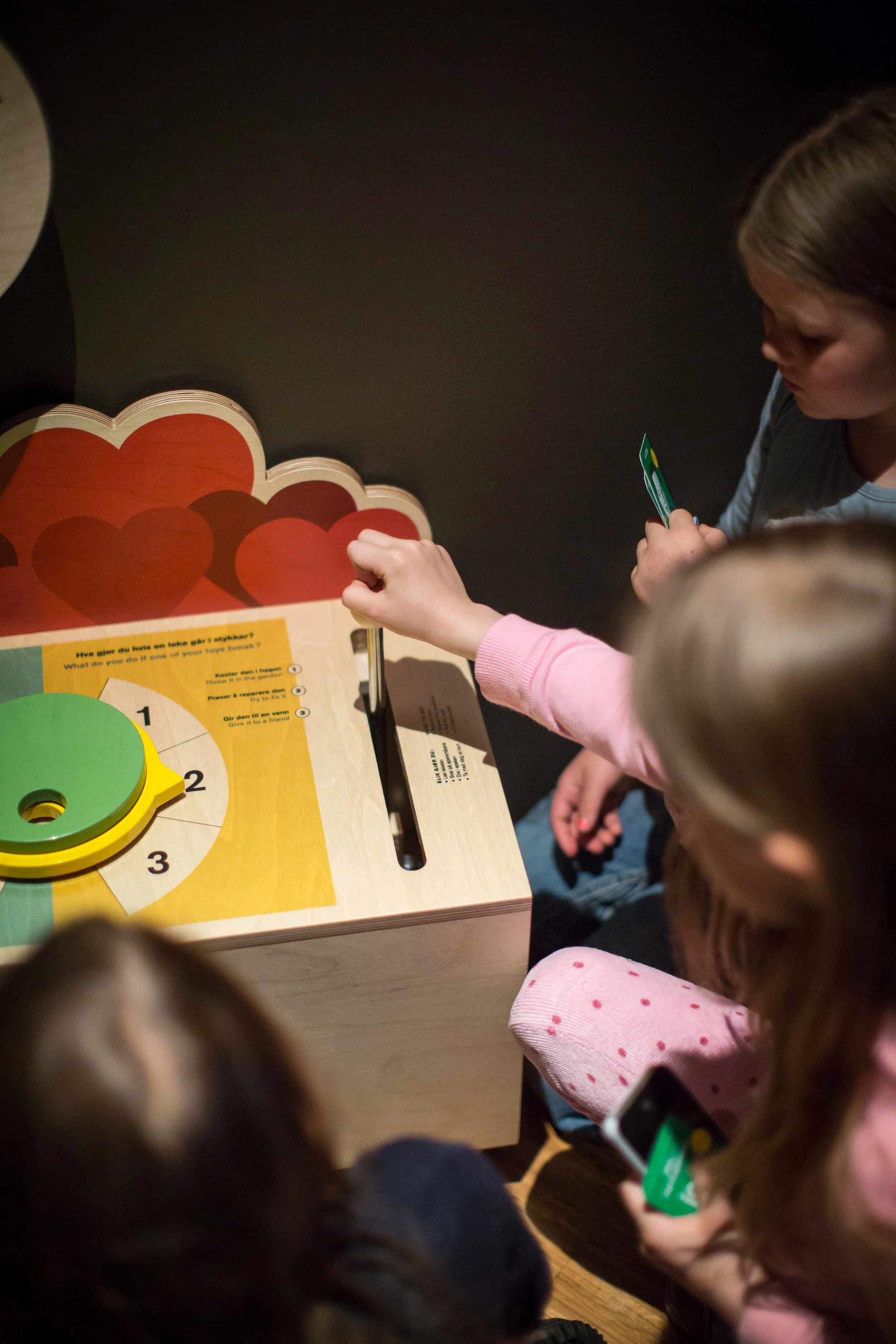
Fred & Toca Loca goes green
Partners: Bolt og Klock+ Marte Frøystad
2015
Foto: Johannes Granseth/Nobels Fredssenter/ Anita Myhrvold
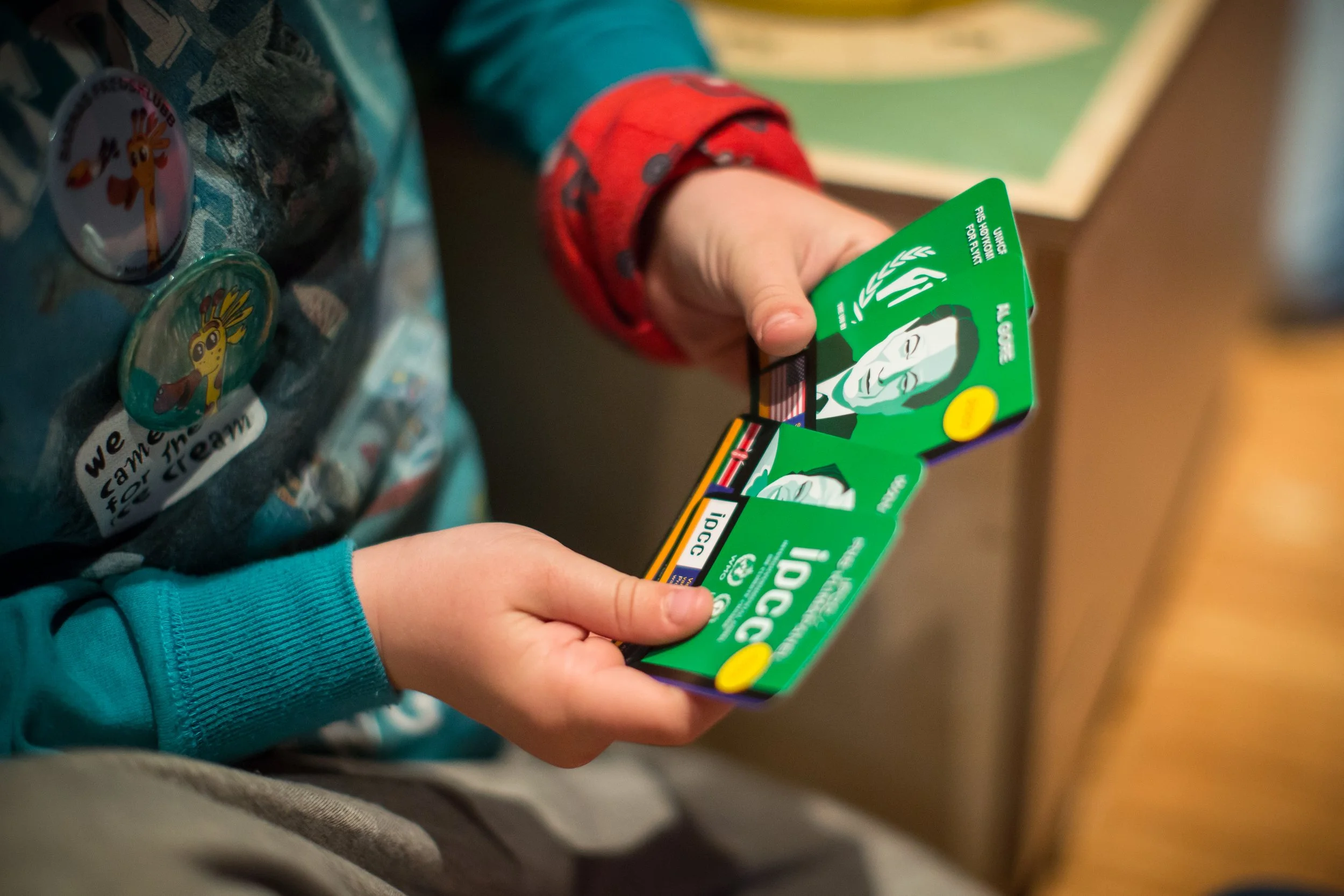
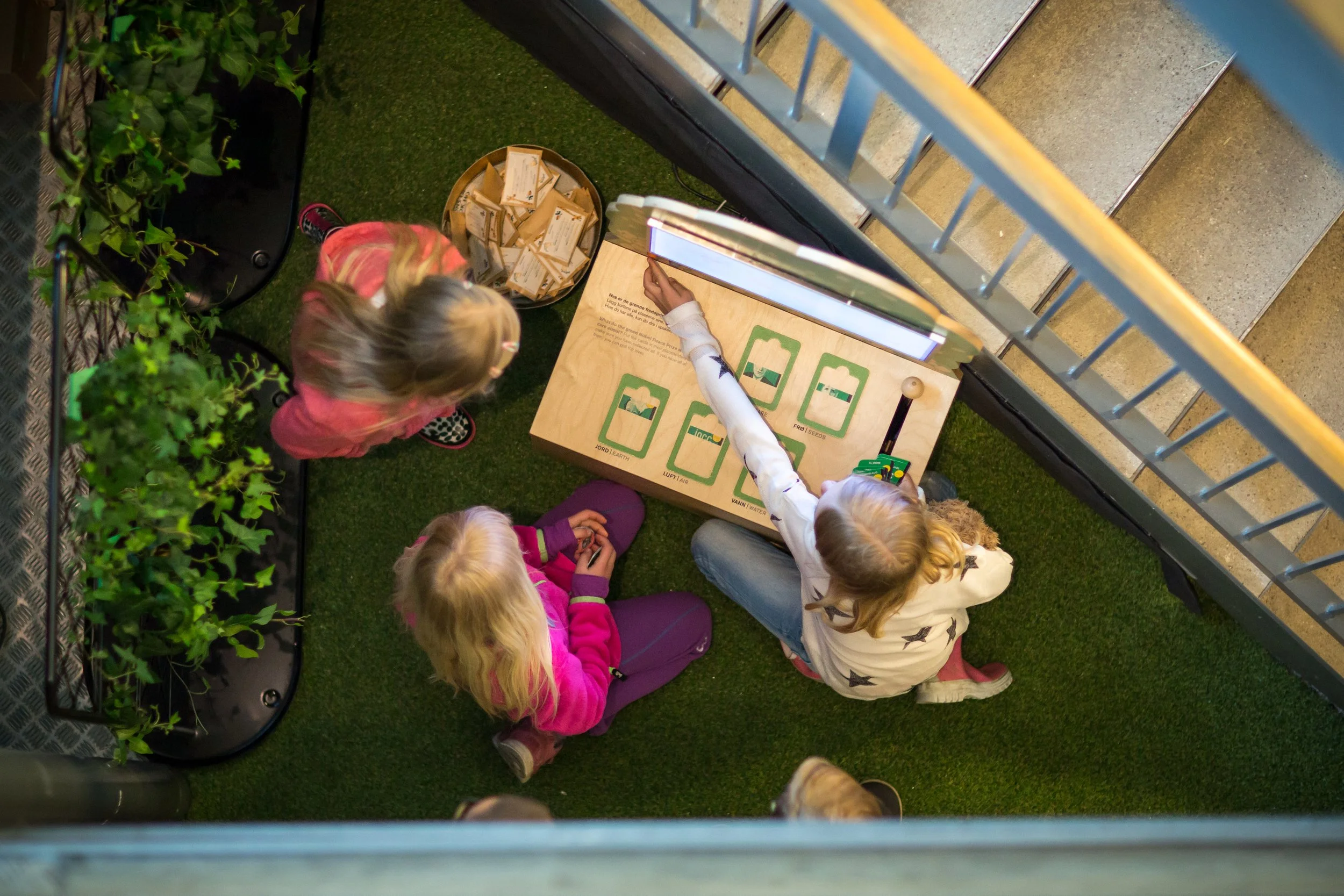
Fred and Toca Loca live at the Nobel Peace Center, and this was an activity for the children visiting. Because Fred’s plant isn’t thriving, Toca Loca suggests they take a look around the museum. Toca Loca has heard some of the Nobel Peace Prize winners are “green”. Maybe they can help? We invited the children to join Fred and Toca Loca in their quest for the green Peace Prize winners, to learn about the accomplishments of the winners, about what we can do for nature and why it is so important that we take care of Planet Earth!
Unicef
Partners: Bolt & Klock + Marte Frøystad
2015
Foto: Johannes Granseth/Nobels Fredssenter.
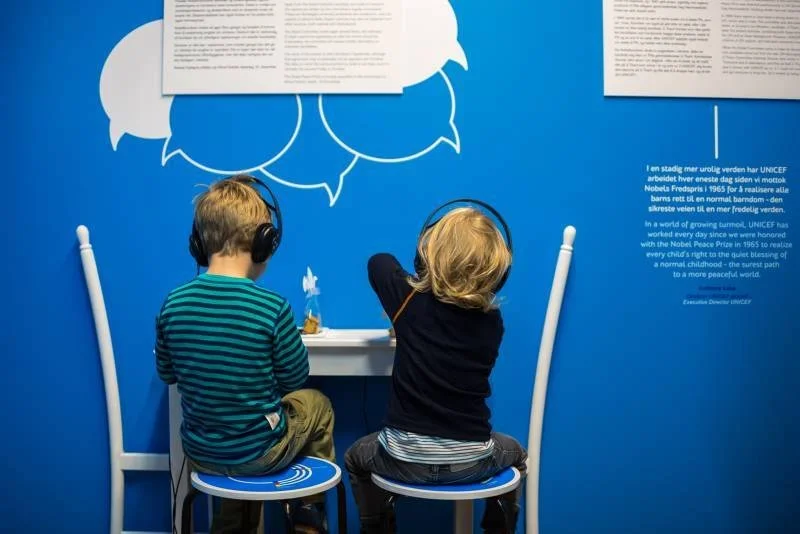
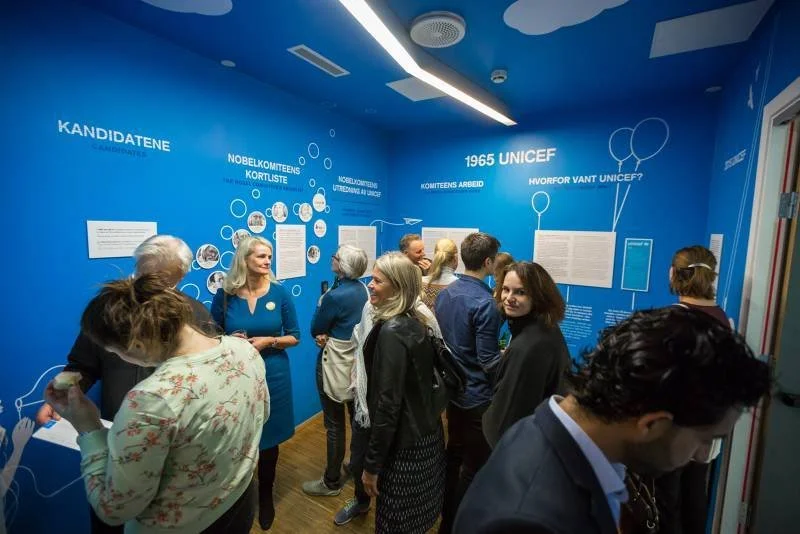
Since UNICEF received the Peace Prize in 1965, the organization has worked every single day to work for peace by carrying out its mandate: Securing children their basic rights.
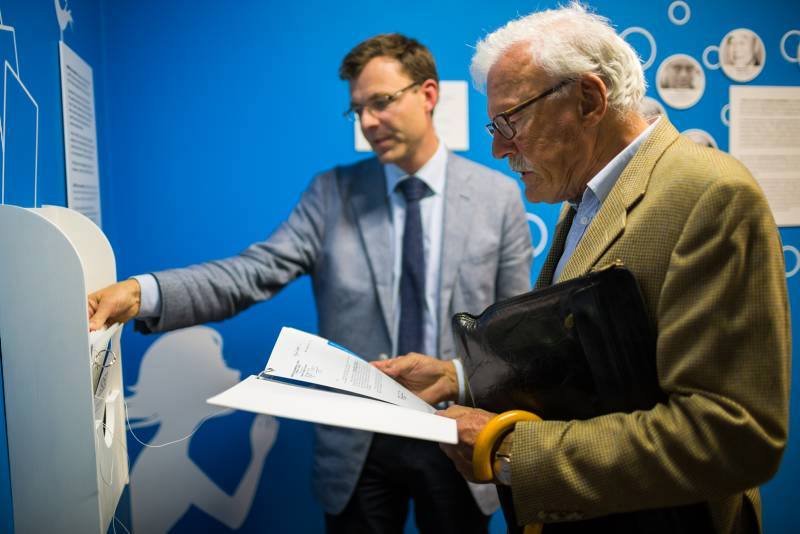
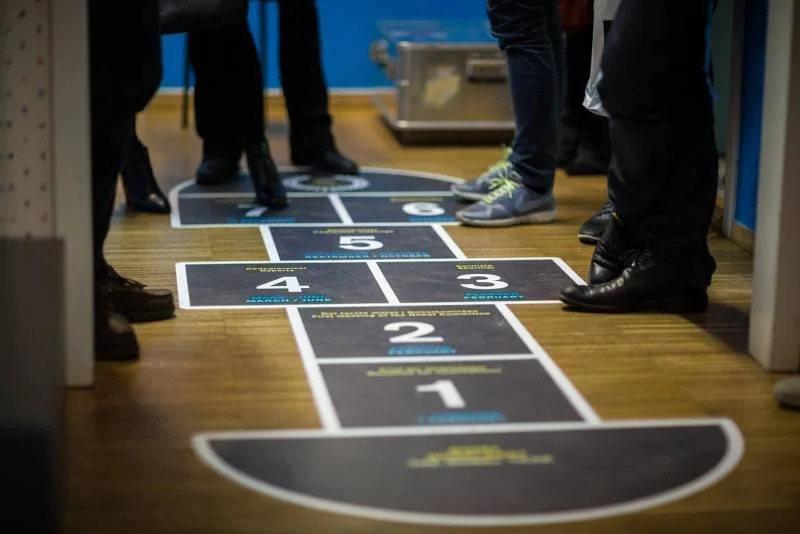
In connection with the 50th anniversary for the price, we designed an exhibition based on documents that had been kept secret until then. The documents tell who nominated UNICEF, why, and about the Nobel Committee's study of UNICEF as a candidate. Everything presented in a universe of UNICEFs recognizable blue colour and simple, white illustrations.
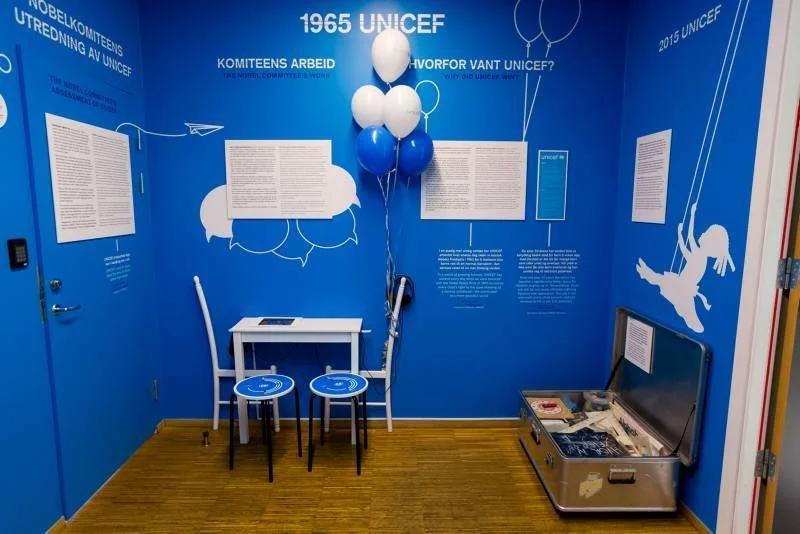
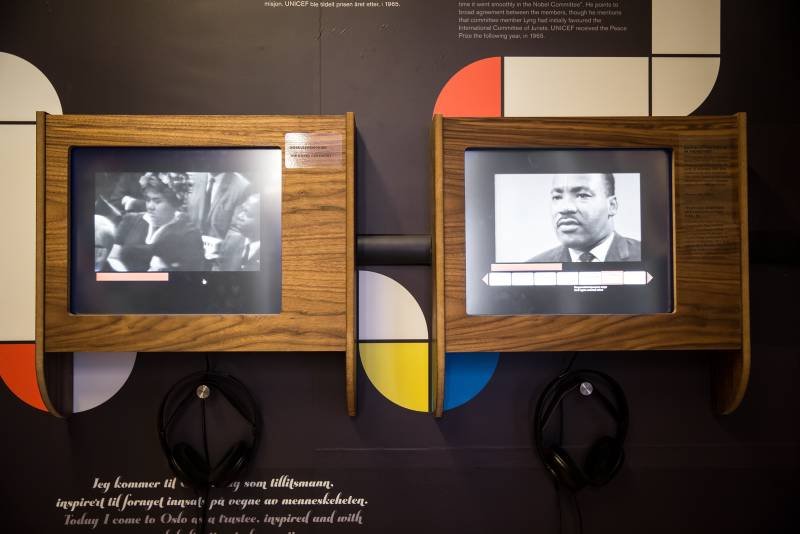
Martin Luther King
Partners: Bolt & Klock + Marte Frøystad
2014
Foto: Johannes Granseth/ Nobels Fredssenter.
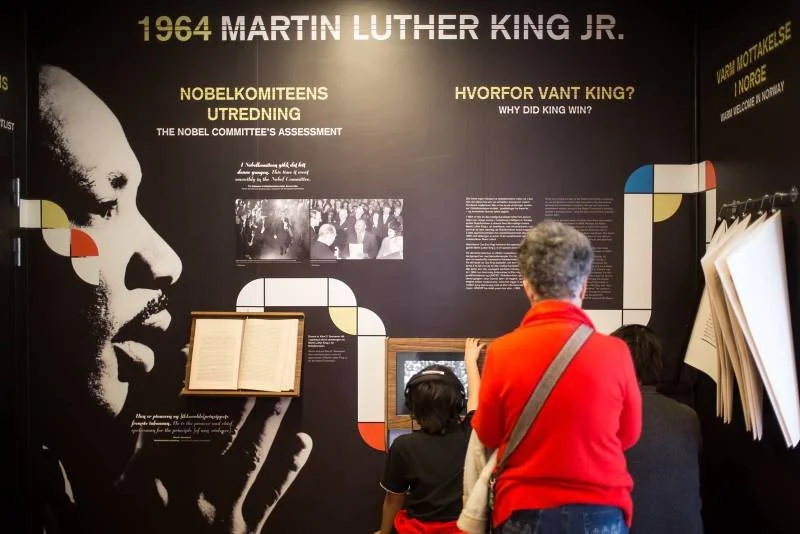
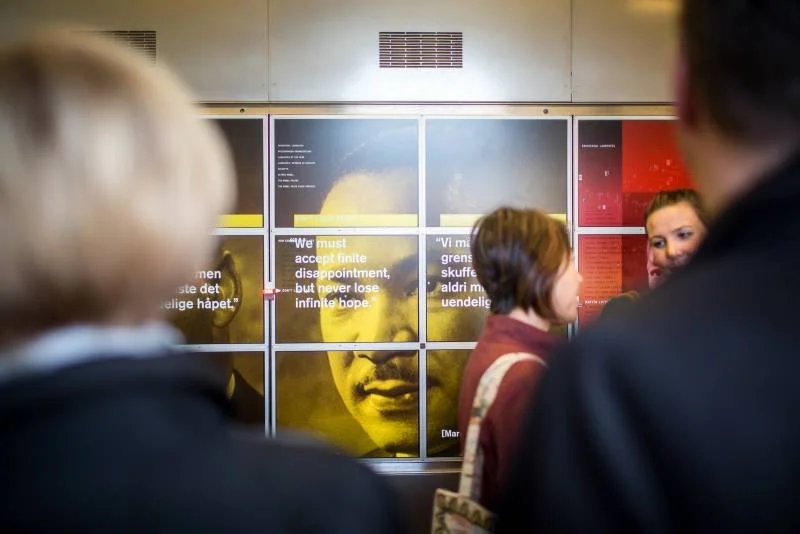
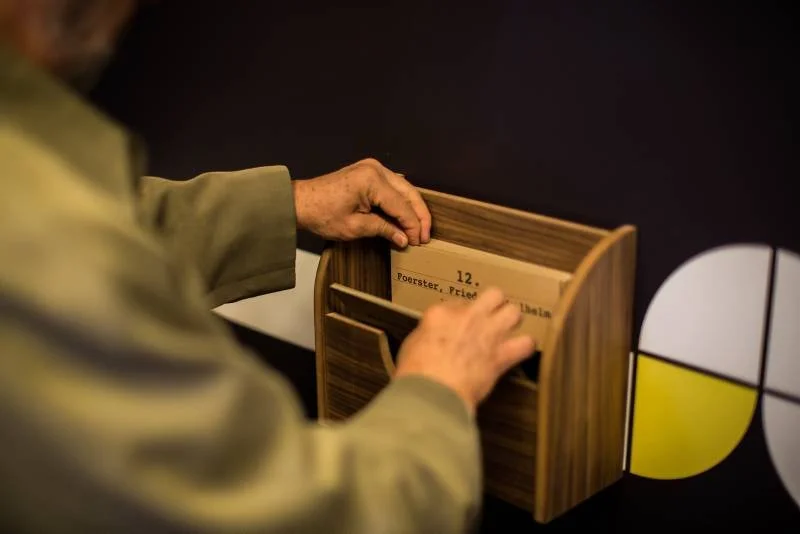
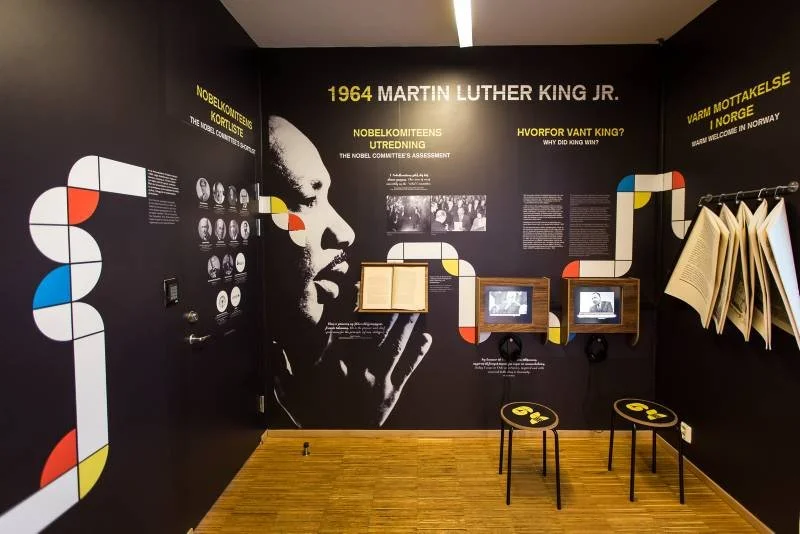
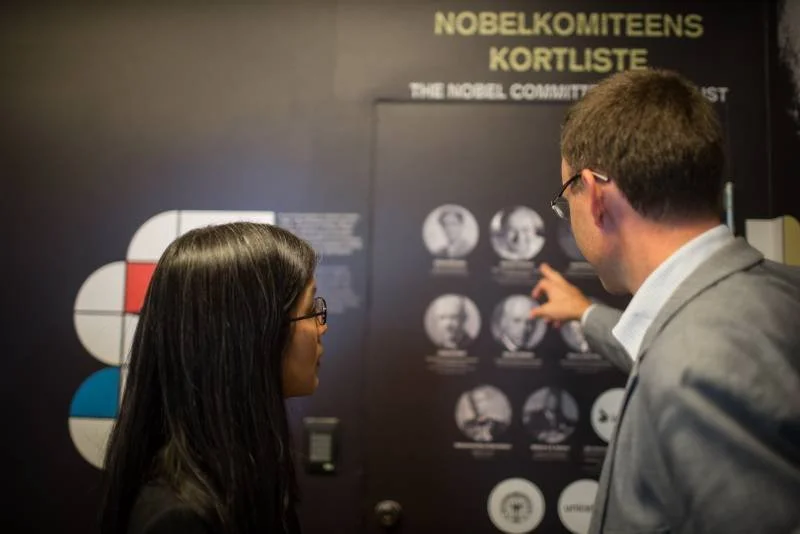
In 2014 it was 50 years since Martin Luther King, Jr. – one of history’s greatest icons of non-violent activism – was awarded the Nobel Peace Prize. Since 1964, all the documents relating to the award – nominations, notes and reports – have been classified as secret, and kept under lock and key in the Norwegian Nobel Committee’s extensive archive, until 2014.
For the first time we had access to all the material about the award and the documents reveal who nominated King, how the Nobel Committee worked and who were his strongest competitors to get the price. The exhibition is based on this archive material, and we made it available to the audience by making replicas and elements possible to touch and feel and to read and experience in a distinct time palette.
To commemorate this historic occasion The King Center in Atlanta, USA opened the exhibition '1964 Martin Luther King, Jr.', based on the same exhibition designed as for the Nobel Peace center.